Cancel anytime 2191 Movies. A new one everyday
Watch anywhere
Cancel anytime 2191 Movies. A new one everyday
Watch anywhere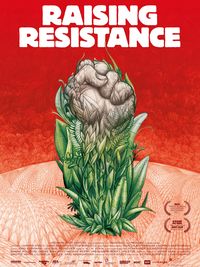
In Paraguay, the fourth largest exporter of soybeans in the world, small farmers known as campesinos find their land and livelihoods threatened by the rapid expansion of genetically modified soy plantations. Massive pesticide spraying, immune only to the engineered crops, devastates neighbouring fields and harms local communities. Raising Resistance follows their determined collective fight against powerful agribusiness interests.

OFFICIAL SELECTIONS
IDFA International Documentary Film Festival Amsterdam
Banská Bystrica International Environmental Film Festival
Washington D.C. Environmental Film Festival
Nonfiktionale
Vaasa International Nature Film Festival
Festival Filmar en América Latina
Muestra Internacional Documental Bogotá
Vancouver International Film Festival
NaturVision Filmfestival Ludwigsburg
Full Frame Documentary Film Festival
Roma Independent Film Festival
Berlinale German Cinema
DocPoint Helsinki
Solothurner Filmtage
Filmfest Hamburg
Visions du Réel. Festival International de Cinéma Nyon
Campesinos, GMO soy, and the fight for Paraguay's land
In a Paraguayan field, a group of small farmers block a tractor to defend their land. That single act of defiance is the heartbeat of Raising Resistance, a 2011 documentary that traces what happens when industrial agribusiness moves in and a community decides to push back.
Paraguay is the fourth largest exporter of soybeans in the world, and in recent decades countless hectares of forest have been cleared to make way for genetically modified soy plantations. The pesticides applied to these crops are lethal to everything except the engineered soy itself, spreading beyond field boundaries and destroying the subsistence harvests of neighbouring campesinos. Led by farmer Geronimo Arevalos, the small farmers organise: squatting farmland, confronting spraying operations, and carrying their demands from rural communities to the streets of Asunción. The film frames this local conflict as a parable about the global tension between industrial agriculture and the diversity of land, culture, and ecology it displaces.
Bettina Borgfeld and David Bernet co-directed and co-wrote the film, produced under the Maximage and Pandora Film Produktion banners with support from WDR/ARTE and SRG/SSR. The pair bring a cinéma vérité sensibility to the material, keeping the camera close to the campesinos over an extended period rather than relying on talking-head testimony. The result is an social documentary that is also, in equal measure, a nature documentary: the landscape itself, steadily poisoned and cleared, is as much a subject as the people who depend on it.
Raising Resistance travelled extensively on the international festival circuit after its 2011 release. It screened at the IDFA International Documentary Film Festival Amsterdam, one of the world's most prestigious documentary showcases, and at Visions du Réel in Nyon. The full selection list, which spans North America, Latin America, and Europe, is shown below.
Raising Resistance is available to stream on GuideDoc. GuideDoc is a curated platform dedicated entirely to documentary film, where half of all revenue goes directly to the filmmakers. Browse further titles in the food documentary collection for related viewing on agriculture, land use, and food systems.
If Raising Resistance resonates, GuideDoc has several documentaries exploring comparable themes of environment, community, and social struggle. Island of Hungry Ghosts examines displacement and place from a different angle, while Eskawata Kayawai: The Spirit of Transformation follows an indigenous community navigating outside pressures on their land and culture. Breathless and High Forest Tale both engage with environments under threat.



2191 films
And a new one every day

The preferred platform
of true documentary lovers
Half of all revenue goes
directly to the filmmakers