The world of dreams remains one of the most enigmatic places of humanity. We spend a third of our lives asleep and still do not know what to do with what we dream, because irremediably we prefer to forget it. Here on Guidedoc we propose three interesting ways to use the content of dreams to make movies.
In case you didn't know, Guidedoc is a global curated documentary streaming platform. You can watch the world's best award-winning docs from around the world. We have new movies every day.
1 - Write / Record the content of your dreams

The reason why we usually forget what we dream has to do with a biochemical process that erases our short-term memory when we wake up, so if we do not quickly capture the details of our dream there will be no way to recover them in the future.
That is why it is advisable to keep a dream journal, a notebook dedicated to write and draw our dream experiences every morning when we wake up. We can train ourselves to remember our dreams by placing a reference point in our bedroom just before going to bed, for example a lamp or a picture on the wall.
Each time we look at this object upon awakening, it will help us to remember that we must document our dreams for future ideas and projects.
2 - Make Associations
The main characteristic of dreams is that it is a process of hyper-association, where two completely dissimilar objects can be related, as they never would in the real world.
That is why dreaming is the world of the possible. It is an invaluable breeding ground for artistic creation, just like it the surrealist applied it at the beginning of the last century in Europe.
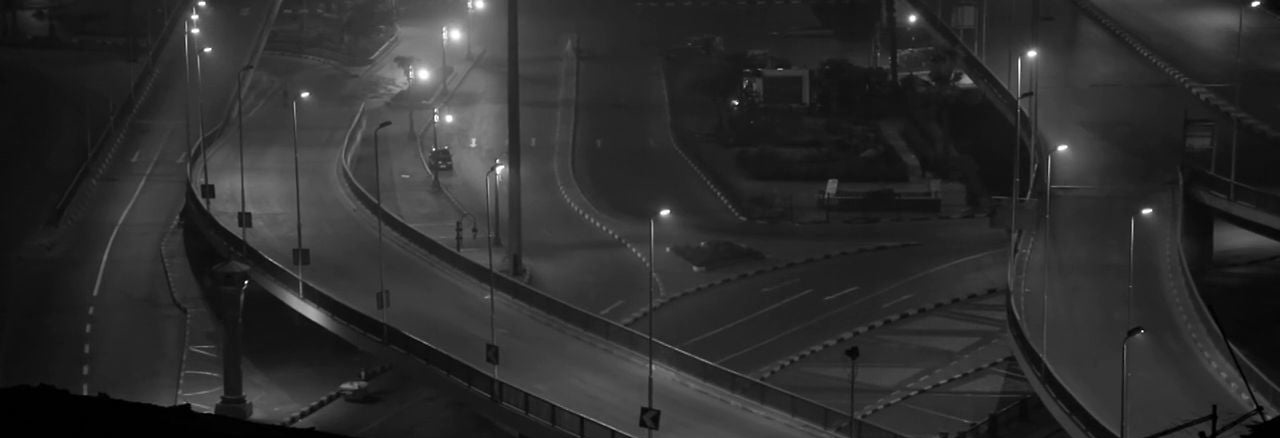
An example of these associative operations is the movie Excursions In The Dark (available to watch online on Guidedoc). This Egyptian short film is composed of nocturnal images of a lonely Cairo that pass before our eyes while we listen to fragments of dream descriptions of some of its inhabitants.
3 - Experiment with a sensory experience

Some consider that the phenomenon of dreaming was a kind of "proto-cinema" since the beginning of humanity. That is, the first cinematographic experience of men and women.
Under the premise that each night we become spectators of a film that happens in our mind, several filmmakers have made their career propitiating sensory experiences from the creation of unusual scenarios.
Luis Buñuel, Alejandro Jodorowski, David Lynch or Guy Maddin are filmmakers who have based in their dreams to create this kind of extraordinary experiences in their films.
You can watch great documentaries now on Guidedoc